The Primary Prevention of Child Sexual Abuse

Important Posts

  • Mission Statement
  • Get The Facts
  • Prevention
  • Get Help!
  • Get Involved!
  • Follow On Twitter
  • Stories
  • Pedophiles About Pedophilia
  • Terms of Use
  • Privacy Policy
Showing posts with label How to help. Show all posts

Saturday, December 31, 2016

Primary Prevention in 2017

I do have some goals for 2017 in regards to primary prevention. This list has no bearing on any future projects, I mean, the whole tone of New Year's resolutions and the like.
I would like to break them down into several categories:


  1. Educating The Public
  2. Sex Offender Registration
  3. Sex Offender Notifications
  4. Sex Offender Residency Restrictions
  5. Educating Families
  6. Sexual Education
  7. Miscellaneous Sex Offender Restrictions

These categories are distinct from the mission statement I have, as these are unique to 2017 and are based on what was accomplished last year. Each goal, in detail:

Educating The Public

The public has a right to know basic and counter-intuitive information about sex crimes. In 2017, it would be ideal if the average person knew what I would say are the top three facts about child sexual abuse: 95% of sex offenses are from first-time offenders (not sex offenders), 90% of abuse is perpetrated by those known and trusted by the victim, and child sexual abuse affects 1 in 6 boys and 1 in 4 girls by the time they turn 18. Will you help the facts about child sexual abuse be known in 2017?

Sex Offender Registration

Sex offender registration has become onerous in the political realm, as well as a financial burden. The trend in 2016 was that the registration requirements of sex offenders do not align with the biggest risks to the general public. Seeing more judicial wins in 2017 that strike down onerous requirements that distract from real public safety threats would be a plus.

Sex Offender Notifications

Sex offender notification has become, to some people (like the vigilante Donna Zink in Washington State, who refuses to read studies on the subject), a way of preventing sex crime. However, many studies and articles surfaced in 2016 (like this one and this one, and this Quartz article and this one for honorable mentions) showing that these notifications only do well under certain circumstances. Therefore, it would be helpful in 2017 if the notification requirements in some areas (similar to the judicial wins on registration) would be lessened.

Sex Offender Residency Restrictions

This is perhaps one of the biggest areas that needs addressing: States and cities that believe that by restricting where sex offenders can live, when they have been shown to have the opposite effect of increasing recidivism and homelessness. More judicial wins that strike down sex offender residency restrictions would be a fantastic win in 2017 (Michigan gets honorable mentions here for their recent supreme court win, which among other things, struck down residency requirements for some offenders).

Educating Families

Families knowing how to prevent child sexual abuse, before it happens, by knowing the warning behaviors in potential abusers is nothing but positive. The more families are aware in 2017 that a potential abuser can look very much like a great mentor for children, the better. Also, the more resources that are available to the general public, the better. I may or may not have something in the works in that regard, but of course, I cannot confirm or deny that as of yet.

Sexual Education

As with educating families, the more children and teens know the facts about sex and sexuality, the more prepared they will be to make informed decisions about sexual behavior. The more prepared they are, the more they will be able to ask for help if they need it. If more states pass legislation requiring sexual education (or sexual abuse education), primary prevention will be furthered in 2017.

Miscellaneous Sex Offender Restrictions

There are many sex offender restrictions that have no bearing on public safety, like social media use. Other restrictions have included registering any and all internet accounts, avoiding libraries (because the children), and avoiding the state fair (because sex offenders lurk in the shadows waiting to kidnap your children, apparently). Can it just be said that the more restrictions are based in factual information, like studies and such, the better? 

Let us all make 2017 a safe place for children, and do what we can to stop child sexual abuse... before it happens. Let us ring in the new year, remembering our most vulnerable people: Children.

Oh, and there are some hints in this post for something big that might be coming in 2017, in case you missed them. Enjoy the New Year, 2017.
Posted by TNF 13 at 7:24:00 PM No comments:
Email ThisBlogThis!Share to XShare to FacebookShare to Pinterest
Labels: Arguments, How to help, Primary Prevention, Sex Offender Registration and Notification Act, Social impact

Wednesday, June 22, 2016

"Comfortably Numb": A Journey Through Pedophilia, An Article By Ender Wiggin

Introduction

Ender Wiggin, who has been a feature on this blog before, has again graciously allowed me to feature one of his posts on this blog. It is about a fifteen minute read, but there is also a lot to process.

Why am I featuring stories from pedophiles on a blog dedicated to the primary prevention of child sexual abuse? Because unless we can understand what it is a non-offending pedophile goes through, and how they are different from the two categories of sexual abusers, we cannot firmly establish a line between a non-offending pedophile, a situational abuser, and a preferential abuser. Without being able to draw that line, we cannot be rational or be able help non-offending pedophiles realize that they will not inevitably harm a child.

The stigma against pedophiles and the barriers that interfere with their ability to seek professional help if it is needed is also a significant barrier to accepting the idea that child sexual abuse is preventable. I believe it is time to break down those barriers, because barriers are not helping the general public understand the topic of child sexual abuse prevention.

Pedophilia is an incredibly difficult condition to understand and empathize with. It is incredibly rare, and to most people it is very mysterious. Frankly, Ender has a way with words and personal stories that far surpasses my ability to tell a story of myself and my own journey through pedophilia. I think it is very valuable to hear his story, especially if you are prejudiced against pedophiles. Without further words, here is his story.


Comfortably Numb


A journey through realization, despair, lethargy, awakening and acceptance

This is my most personal post to date. I feel very comfortable analyzing things from a rational, logical, factual point of view and then putting them down into written word. Writing about my feelings, however, is a completely different topic. I hope this post gives a different perspective of what it’s like growing up and living one’s life as a pedophile.

Mylife took a dramatic turning point a little over two years ago. Even before that, I was never in denial about my attractions. I have memories of finding other boys attractive since as early as when I was eightyears old. As you can imagine, at the time I didn’t know much about sex — in spite of having discovered pornography (by accident) and with it masturbation two years earlier — or the notion of sexual attraction, let alone homosexuality or pedophilia. But even prepubertal children often know they feel something special that they don’t quite understand or know how to describe for some people, typically children their own age. In most cases, a boy will feel that something especial for a girl — they have a crush. In my case, I felt it for other boys my age. Of course I didn’t know any better at that age, so I never even questioned whether it was normal or not. It just was.
As I kept growing up, the boys I found attractive didn’t quite grow up with me. Up until I was about fourteen I would still find enough boys my age attractive to not think too much of it. At that age I was more aware of sexuality and started really worrying about being gay. Having been brought up in a Catholic household, it was a very scary thought. In addition, homosexuality wasn’t nearly as discussed in the open as it is today, let alone accepted by society in general. However, I always knew that I found a lot of younger boys attractive. This would typically be the younger brothers of my age peers who I knew from my neighborhood or from school, or simply boys I would see in movies and TV shows. This went on for the next couple of years. I don’t even know where or when I ever heard the term pedophile for the first time, but I’m pretty sure it wasn’t until much later that the notion of there being adults interested in sex with children even crept into my consciousness.


Up until I was about sixteen I just kept hoping that I was just a ‘normal’ gay boy, and that this would be some kind of phase that would eventually pass. Even if I didn’t consciously know about pedophiles I already knew that something was really off. Now it wasn’t just my friends’ younger brothers that were perhaps two or three years younger than me. It couldn’t possibly be normal for me to develop intense crushes on boys eight years younger than me, and to have sexual fantasies about boys so young. I was so confused. Was I just gay? What the heck was wrong with me? Why me? I still on occasion thought that I would eventually have to come out to my family as gay, and the thought terrified me. When you’re brought up in an environment where your parents have never talked to you about sexuality, and where you are afraid that they will not understand and they could stop loving you, how does one deal with that pain? Who does one talk to? What is one supposed to do?


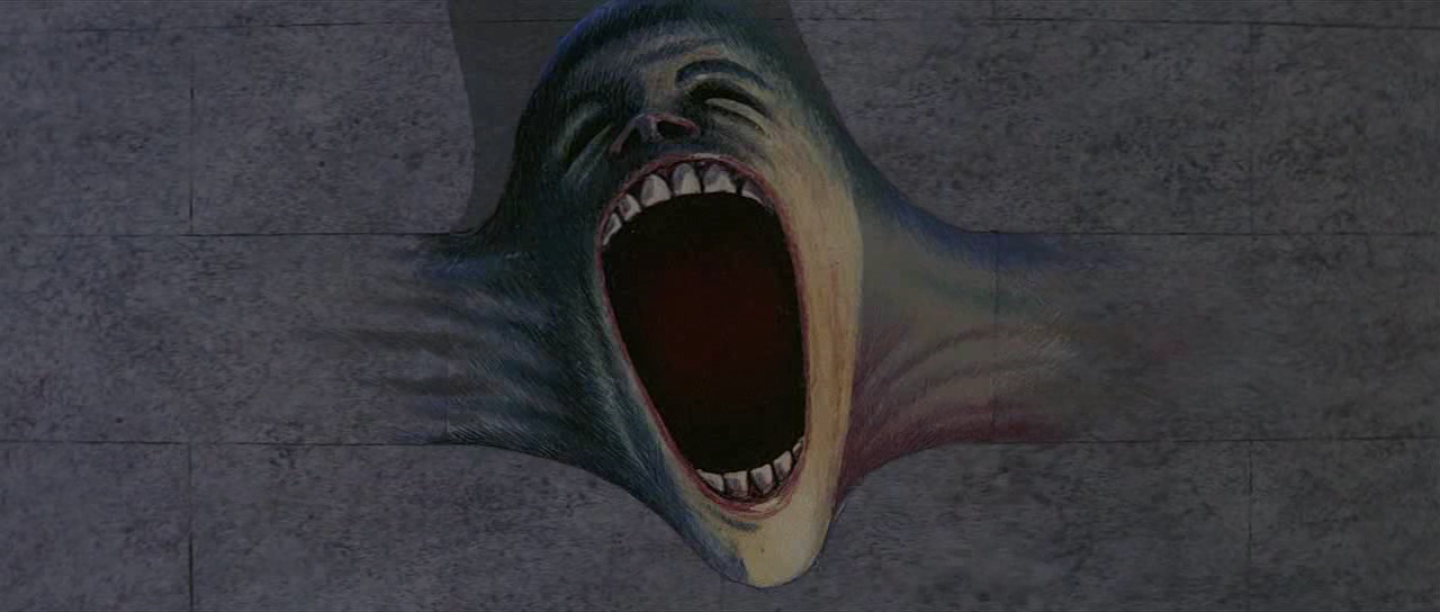
The pain is so unbearable that there is only one way out. You numb your feelings enough to survive, to go through your life weathering the storm as best as you can. You put on a mask and learn to pretend that you’re OK when you’re anything but. You daydream about running away but can’t quite figure out where you’d go. You build a wall around your very soul and you don’t let anyone penetrate it, because you are certain that they will be so disgusted by what they see inside that you just can’t bear the thought. So you never talk about anything substantial with your friends, your siblings or your parents. You become a stranger to everyone in your life. You wear the mask. You become the mask. You become comfortably numb.


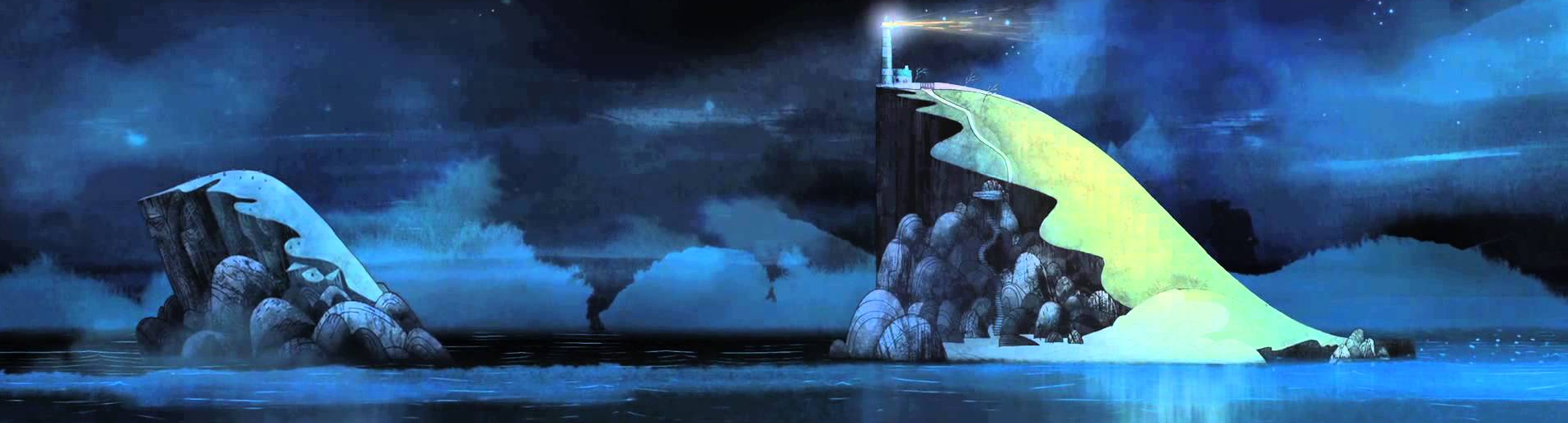
There’s a beautiful Oscar-nominated Irish animated movie called Song of the Sea, in which a boy named Ben discovers that the fantastic world of legendary mythical creatures from the stories his disappeared mother used to tell him when he was little are true, including the fact that his sister Saoirse is a selkie — a mythical creature with a woman’s body on land that turns into a seal in the sea — just like his mother was. There is an Owl Witch named Macha who helps you escape your pain by taking away your negative feelings and bottling them up — literally — in jars. But there is a hefty price to pay. The more you bottle up your feelings, the more and more numb you become, until you turn into stone.

In the movie, the giant Mac Lir’s heart was broken, and the pain was so intense that he cried an entire ocean. In order to save him from the pain, his mother Macha the Owl Witch took away his feelings, and turned him into stone. Thus, he became the island which can be seen from the lighthouse where Ben lives with his family. I became the stone giant. The pain was just too much to bear. I resigned myself to the idea that I would never know love. I would always be alone.

Thus I lived my life; the great pretender. I was social enough. I hung out with my friends from college, while my parents—or anyone else in my life, for that matter — never suspected there was anything wrong with me. I became so adept at wearing my mask and hiding my feelings.
Until one day someone you’ve known for a while does something unexpected and tells you she has feelings for you in a quite unconventional way. And you freak out. And you freeze. So you don’t react. You do nothing. It’s just too scary and you’re too afraid to move.
You’ve already given up on being normal, or even a ‘normal gay guy’. But you wonder, and you ask yourself. If I was normal. If only. Sure, you have some girl friends (not girlfriends) and you like them enough—as friends. In that kind of awkward friendship you can build with someone when you’re constantly wearing a mask and checking that the fortified walls around your soul are properly manned to protect you from assault. You’ve never been attracted to them. Not that way. Not the way a guy your age is supposed to be attracted to a girl. Not the way your friends talk about the girls they’re attracted to. But you do like them. And you realize there’s someone you like a little differently, a little more. She’s the one that you think about when you think “if I was normal”. Because she’s an amazing human being, the kindest heart you’ve ever known. And she happens to be the one that shakes your entire world by telling you about her feelings for you. What do you do? How do you react? You try to pretend like nothing happened and you do nothing. You’re literally too scared.
Until something happens and you just can’t hide anymore. You can’t hide from her. You can’t hide from yourself. So you have to meet up with her. You tell her you like her, but you’re unsure if you’re even capable of loving someone. You tell her that you hate yourself, even if you can’t say why, and that you find it hard to believe that anyone would want to be with you. But she tells you that she sees something in you, even though you’re largely a mystery to her — as you are to everyone in your life. She can sense the pain, though she doesn’t know exactly what it is, and has no idea where it comes from.
You don’t want to lie to her. You really don’t. You don’t want to hurt her. She says she wants to know you, but you know you can’t let anyone know you. Notthe real you. You can’t let them penetrate that wall. It would be… no — you just can’t. You never even think about it at a conscious level. You just know it’s impossible. You don’t even make a decision. It’s not even an option. But you try. You really want to be normal, so you try to be normal. And it hurts. Being in a relationship with someone is scary when you have never let anyone come close to you before. When — in addition — you have a secret as terrible as this one, it’s even harder. When you have numbed your feelings so much that you don’t even know what you feel, how do you express them?


And she helps you, and you learn to open up, little by little. But you keep that secret hidden, because you don’t know otherwise. Because that’s just what you do. Who in their right mind would do any different? And you start to build something. A family. And they’re all that you’ve ever done that is good, or so it feels to you. But you’re still comfortably numb, it’s too scary and painful to feel. You’re not in denial — you know well what you are. What you’re attracted to. You just haven’t named it. It’s just there in the back of your mind, and you ignore it, even though you notice it every day. And time goes by. The months turn into years; the years into a decade. I lived my life in lethargy. In an emotional auto-pilot.

Ithappened unexpectedly, the awakening. I was traveling for work when, back in my hotel in the evening, I came across a YouTube video by James Cantor talking about pedophilia. How? Why? I don’t even remember what led me to it. The Pedophile’s Brain. Yeah, of course I’ve heard that word before. So why had I never thought of myself as… that? It hit me like a truckload of bricks. My memory is hazy afterwards. I don’t know how that led me to an article, and then another article. And one of those articles led me to theVirtuous Pedophiles website.


I sat there in my hotel room, reading the stories of other people like me featured on the main page. People struggling with the same pain. And suddenly tears are rolling down my face. I fill in the contact form to access the peer support forum, but it takes some time to get a reply. My mind is racing. The next morning I catch a flight home. I spend the entire flight crying. I think about getting back to a wife who doesn’t know her husband; children whose father will never be able to let them know him. How could I do that to them? It’s not fair. She doesn’t deserve this. They don’t deserve this. But what can I do? This is what I am. This is who I am.
I get home, and I have to keep wearing my mask. Thank God I can do this so well. So many years of practice. I can’t let her see the turmoil inside, lest she asks. I finally get access to the VirPed support group, and I introduce myself. I refer to myself as a pedophile for the first time in my life. I cringe. The welcome is soothing. They get it. They understand. I get involved, receiving support and at the same time giving it to other members, new and old. Giving is more healing than taking. And quite soon it happens. You hear people telling stories of how they came out — or were outed — to their loved ones, and how they were accepted, forgiven — if necessary — and supported. Wait, what?Is this really possible? Can one say this about oneself, and not be rejected automatically? I also hear some horror stories about just that; unfortunately not everyone can be so understanding and accepting. Unconditional love exists, but there is no guarantee.


Thus the urge starts to grow. Should I tell her? I want to tell her. How will she react? Will she be able to forgive me? Will I lose her? Will I lose my children?The numbness is gone. Everything hurts now. I cry easily. Way too easily. Hiding that something is really wrong with me becomes harder than it’s ever been. The burden is so heavy now. It weighs me down. I wouldn’t know until later that these are symptoms of clinical depression. But I somehow keep battling it out of sheer willpower for several months, while I struggle with the decision of whether I should or should not tell her. I have many reasons to, but are they the right ones? Is it just because I want my conscience to be clean? Because I want to feel better? Because I can’t bear the pain of carrying this burden by myself any longer? I have many reasons not to. Good reasons. I don’t want to lose them. I don’t want to place my burden on her. I convince myself, several times, that the risks outweigh the benefits.
I keep involved in the VirPed community and I start building friendships. These are strangers from the internet and somehow they know me better than anyone ever knew my in real life, including my parents, siblings or wife. There are no barriers with these people; no masks. They understand, and they’re there for you when you need them. You’re there for them when they need you. You take great solace from being able to help them, and they accompany you through this difficult time. They help you put things into perspective and ultimately become instrumental in you making the toughest decision you’ve ever had to make in your entire life.
It started as a therapeutic exercise. A letter. I didn’t plan on giving it to her. It took months to write, and many tears were poured over it. Many late night conversations with my friends on the forum. Many sleepless hours at night lying by my wife’s side in bed, wondering what would happen. Praying. Dreading.


One night, after yet another business trip, I knew it was the time, and I gave her the letter after the kids were asleep. Instead of having a nervous breakdown while she read it as I had imagined countless times, I felt an inexplicable calm. And cold. I was waiting somewhere else in the house, and when I heard her footsteps coming towards me, that’s when I crumbled and started to cry. We hugged, very tightly. She was crying too. I’m sorry. It’s all I can say. I’m sorry. The mask was off. For the first time in my life, someone knew me. All of me.
There’s a lot of tears. Some tough questions. And a lot of love. Unconditional love. There’s forgiveness, and acceptance. Acceptance feels like such a balm. It’s hard to describe. Like after-sun lotion on skin burned by a summer sun.

Ireally am a different person now. It hasn’t been easy. She’s been incredibly understanding, sympathetic and supportive. I definitely do not deserve her — and yet here I am. It’s hard to cope with this knowledge, for both of us. For me, knowing that someone knows this part of me that has remained a secret for so long. For her, well, it’s kind of obvious.
She encouraged me to seek some form of in-real-life support, and I started seeing a therapist, which has been incredibly helpful. No, she wasn’t expecting to cure me, and neither was I. But being able to process of all those repressed feelings from so many years back has been incredibly liberating. My therapist has been amazing. I’ve also been taking medication, which has helped with the depression, and I’m doing much better.


I never needed therapy to know I couldn’t act on my attractions. It was never even an option for me. No one had to ever tell me it was wrong, it just felt wrong. Even growing up when I was still a teenager, it was just something that never even crossed my mind. I don’t need therapy to not be a danger to children. I never have. And I don’t need therapy to ‘cure’ me, because it just can’t.
Therapy has helped me accept myself. Accept that I am what I am, and that I am a worthy human being. In fact, I’m probably a better human being because of it. Because if I wasn’t like I am, perhaps I’d be more intolerant towards others. Being part of a hated minority does give you some perspective on things. Before all of this, though, I don’t think I had accepted it. I had resigned myself to it, if anything. But that’s not the same thing.


As a practicing Catholic, I also sought support from a priest I knew. I came out to him shortly after, and he has been incredibly supportive and understanding. His acceptance has meant a lot to me at a personal level. He also helped me understand that if I am the way I am it’s because God has wanted me to be this way. I can’t fathom why, but it does bring me comfort. God has not only made me this way, but he loves me and accepts me just as I am. And He will never turn His back on me. Many people of faith will say that I ought to pray every day to be rid of this condition, to be ‘healed’. Pray the pedo away. And if I don’t succeed, it’s because my faith wasn’t strong enough. Perhaps it isn’t, but I just don’t believe things work that way. My priest has helped me realize that the real miracle here is what’s happened in the last two years. That I am able to accept myself fully. That my wife was able to accept me and forgive me. And that we can continue to be together, building our family, building our future and that of our children.
That is all I ever needed. All I ever wanted. To be known. To be accepted. To be loved. For real. Not the me with the mask, but the me behind the mask. The hurting me. The vulnerable me.


Posted by TNF 13 at 6:13:00 AM No comments:
Email ThisBlogThis!Share to XShare to FacebookShare to Pinterest
Labels: Attitudes, Beliefs, Empathy, How to help, Pedophile, Pedophilia, Prevention, Support system

Sunday, May 29, 2016

What Is Pedophilia? And Those Other Hard To Pronounce Things?

The Three Terms

Pedophilia is the condition of being attracted to prepubescent children, while pedophilic disorder is the disorder that fits the diagnostic criteria in the DSM-V. Hebephilia is the condition of being attracted to pubescent children. Ephebophilia is the condition of being attracted to post-pubescent adolescents. It is possible for anyone who has at any time been attracted to those age groups to not meet the rest of the criteria for the disorder, and it is possible that those who have a primary attraction to one or more of those age groups do not meet the rest of the criteria for the disorder.

What Is Pedophilia? The Simple Answer:

There is no simple answer. I am sorry, if you were looking for one, that you came here to find one. But the topics of child sexual abuse, of sexual interest in children, and of child sexual exploitation are vast and complex. None of them can be explained, solved, or reacted to simply. Attempting to oversimplify these issues will likely result in more harm, not less.

Popular Culture

Most people think that pedophilia is the sexual abuse of a child, and equate pedophiles with people who have molested or abused children. They lump people who have viewed child pornography into this group, even though the impact of viewing child pornography is more about creating both a psychological and popularity demand (similar to how posting on social media gets 'liked', and results in more posts, the download counts of child sexual exploitation material result in a sort of internet popularity). To most people, pedophilia is synonymous with the sexual abuse of a child. This is wrong. Most abusers do not have a sexual attraction to children, and most who have a sexual attraction to children do not sexually abuse children.

Why Is Usage Important?

It is easy to think that sexual abuse could never happen to anyone you know. The statistics make it extremely likely that you already do know someone who was affected by child sexual abuse, but it is extremely unlikely that they will talk about it. By portraying those who do sexually abuse as the filthy, monstrous, inhuman pedophile, we blind ourselves to the facts about child sexual abuse. To use the incorrect terminology, to dehumanize child abusers means that we reinforce the myths that enable abuse to happen. That extreme minority of sexual predators relies on the fact that most people believe the myths about abuse and not the facts. And those that have already abused a child rely on those myths to ensure that they will not face the consequences for their actions. Those myths mean that abusers can walk free, and that the child will never tell. Breaking those myths is what will help prevent sexual abuse.

An Attraction To Children

Some people automatically equate an attraction to children (children of any age) with pedophilia. Some people also automatically equate pedophilia with child sexual abuse. Neither of these associations are completely accurate. While someone may have occasional attractions to children, that would not automatically necessitate a pedophilia diagnosis according to the DSM-5 (The Diagnostic and Statistical Manual of Mental Disorder, Fifth Edition). One can find pedophilic disorder, or pedophilia, on page 697 (PDF page # 729). There are three diagnostic criteria for pedophilia: Recurrent, sexually arousing fantasies, or urges, or behaviors involving prepubescent children; The person with the disorder has acted upon them or they find the fantasies or urges to cause marked distress or interpersonal difficulty; The person with the disorder is at least 16 years old and is at least 5 years older than the prepubescent child. There is also a note not to include someone in late adolescence in a sexual relationship with a 12-13 year old. That is just the criteria for pedophilic disorder.

There are other tidbits of useful information in the DSM-5, like the fact that pedophilia is treated as a different concept from pedophilic disorder, or the fact that a diagnosis in adolescence can be problematic due to the difficulty in determining what is curiosity and what is worthy of a diagnosis (thus the criteria of being 16 and 5 years older). They discuss the fact that pedophilic disorder can wax or wane with or without treatment due to differences in the distress of the person, social impairment, or likelihood to be sexual with a child, but that while the distress and social impairment might change, the sexual attraction to children (pedophilia) does not. In other words, pedophilia and its relatives, or the sexual attraction, functions as a sexual orientation that cannot be changed, cured, or treated.

In other words, pedophilia is a very specific thing that must meet very specific criteria to qualify as pedophilic disorder. It is possible to have the attractions and fantasies involving children without having the urge to act upon them. It is possible to be attracted to a child that is in the midst of puberty and not fit the diagnostic criteria for pedophilia, because the child they are attracted to is not prepubescent. It is possible to be attracted to a particular age group of children without having distress or interpersonal difficulties and thus not fit the diagnostic criteria for a disorder.

In short, it is possible to have an attraction to children and have it not be worthy of the label "disorder". Having a disorder means that treatment and support are suggested to help manage the disorder and make the disorder less impactful. Having a disorder does not mean that someone is "damaged goods" or in any way deficient.

Medically And In Psychology

Medically and in psychology, pedophilia is a narrow and specific ongoing attraction to prepubescent children while hebephilia is a narrow and specific attraction to pubescent children and ephebophilia is a narrow and specific attraction to post-pubescent children. Popular usage of these terms, particularly pedophilia and pedophile, are not accurate to the understanding of doctors, psychologists, and psychiatrists who specialize in paraphilias, which is a catch-all term for the variety of sexual disorders people can have. As a researcher will tell you, there is no clear line on which sorts of sexual interests warrant a diagnosable disorder and which are just unusual. Paraphilia, like anything within mental health subjects, is a vast subject with a lot of debate over concepts, how those concepts are labeled, and how those labels can bring unnecessary weight to the concept they are meant to describe.

For example, pedophilia brings a different response than saying "having an ongoing sexual attraction to children who have not hit puberty", just as "child rapist" and "sex offender" have different connotations and arouse different feelings. That is why most academics prefer to use the term paraphilia rather than the more common "sexual perversion" or "sexual deviance" that would be more recognizable. While I am not a researcher, I think there is a lot of merit to choosing terms and labels that both accurately describe the concept they attempt to illustrate. However, there does come a point at which certain labels that, while they may be more accurate, are just too much for the average person to comprehend or process. For example, trying to get everyone to use the more technically accurate "child sexual exploitation material" rather than "child pornography" is just something that will not catch on except in academia.

With all of those discussions aside, I think it is safe to conclude that when certain conditions are met, an attraction to prepubescent children meets the criteria for pedophilia and the person with the condition can be known as a pedophile. Such a person would have the disorder of pedophilia.

Disorder Or Not?

A rather valid point is made about disorders: It is a stigmatizing and heavy word depending on who is using it and how, and who is hearing it and in what context. There is no universal understanding of what a disorder is (though, to that point, there is no universal understanding of most common words, and context, as always, plays a heavy role on how words are meant, perceived, and received), but I think we can generally say that a mental health disorder is something that warrants support and care so that someone with a disorder can live a life that is not as impacted by the disorder. Maybe this is just my perception, but I think that having a disorder is not a reflection of our choice to have it or not, but what someone with a disorder chooses to do about having it.

Words are always limited because of how they are perceived, and it is just not possible to be 100% accurate to the concept a word is meant to communicate. I think "disorder" is the word we have to describe a mental condition that causes interpersonal or personal difficulty and distress without automatically being negatively stigmatizing. There are some terms that will just never catch on in popular usage. While some people can waste time discussing what terms are more technically accurate and why, and what words best fit the concepts attempting to be communicated, I think those are discussions that will fly over the average person's head and bore most audiences. The trick in advocacy is coming up with the right words to use in the right order so that the wrong message is not conveyed, and so that an accurate picture is painted. Unfortunately, it is extremely difficult to do that in very few words.

With all of that said, pedophilia and its relatives, in general, should be considered a disorder in the vast majority of cases. Whether admitted by the person with the attraction or not, having such a stigmatized disorder automatically results in distress if one is aware of the stigma with which it is viewed by the majority of the world's population. While it is possible to have the attraction without having interpersonal difficulty or distress that would make it a disorder, those cases are likely rare because of the current climate and general attitude towards such an attraction, though the disorder seems to stem not from the attraction of itself, but the societal attitude and response to it and the internalized stigmas and beliefs that cause those difficulties.

Regarding the distinction between an orientation and a disorder, the DSM-5 states: "However, if they report an absence of feelings of guilt,shame, or anxiety about these impulses and are not functionally limited by their paraphilic impulses (according to self-report, objective assessment, or both), and their self-reported and legally recorded histories indicate that they have never acted on their impulses, then these individuals have a pedophilic sexual orientation but not pedophilic disorder."


Primary Prevention Tie-In

If you have followed this blog for any length of time, you know I harp on the fact that child sexual abuse is not often perpetrated by people with attractions to children, and that people with attractions to children do not often sexually abuse children. This distinction is important because it serves to educate people on the reality of who sexually abuses children and the factors that lead them to engaging in behaviors that have serious effects on children. Without knowing who abuses children and why, child sexual abuse cannot be prevented.
Posted by TNF 13 at 5:45:00 PM No comments:
Email ThisBlogThis!Share to XShare to FacebookShare to Pinterest
Labels: Arguments, Attitudes, Attraction, Educators, How to help, Parents, Pedophile, Pedophilia, Sexual Orientation, Support system, Treatment

Saturday, April 2, 2016

Defining Child Sexual Abuse: A Therapeutic Approach

It is always helpful to define terms, particularly when terms can be as controversial as the subject matter is. Child sexual abuse is a controversial topic because it is a broad topic. Contained in that one subject are consent laws, mandatory reporting laws, civil laws aimed at improving public safety, SORNA, residency restrictions, sex offenders, law enforcement training, and a slew of other items. Many people love to debate controversial issues.

I used to be one of those people, but on this topic, I have a generally narrower focus. I specifically avoid the legal subjects involving age of consent and mandatory reporting because those issues are never-ending. I also avoid using a legal definition of child sexual abuse, because it is overly broad. It is possible for a legal act of child sexual abuse to occur, yet have the legal victim be an enthusiastic participant in the activity, particularly among older teenagers. It is also possible for teens to send explicit images of themselves to others, and have them be legally charged with child pornography, with themselves being both the legal victim and perpetrator.

That is why I avoid legal conversations. I avoid age of consent, because no matter what number is picked, there will always be someone below that number who is mature enough to consent, and someone above that number who is not mature enough to consent. I likewise try to avoid a legal definition of child sexual abuse: No matter how diligent or understanding the police are, there will always be someone arrested for something that was not harmful to the legal victim.

Therapeutic?

I try my best to be clear that when I talk about child sexual abuse, I use a therapeutic approach. In my treatment/support group, they considered a sexual offense as an act that crossed someone's sexual boundary in a way that harmed or traumatized them. For me, the definition of child sexual abuse is tied with harm done to the victim: If there was no harm, there was no victim, if there was no victim, it was not abuse. The act is tied to sexual exploitation and the aftermath of the act: If the act was done by someone several years older than the victim, and the act was sexually exploitative, coercive, and resulted in harm, it was abusive.

So... what is a child?

In talking about perpetrators of abuse of said children, there is typically an age difference of at least a few years. For example, an 11-year-old touching the private parts of a 7-year-old would be considered child sexual abuse if the 7-year-old was harmed. Developmentally, such behavior is not expected or considered the norm. If a 7-year-old is touching the private parts of another 7-year-old, that behavior is considered normal curiosity and exploration. The key is an age difference. Many groups push for considering anyone under 18 a child, but I do not think the reality is that simple unless a therapeutic definition is used for abuse.

Practically speaking...

That is great, but how does that look practically? An adult who photographs a child when they are nude is sexually abusive if that child is harmed in the process, or afterwards by knowing the photograph is on the internet. They are not if the child is unharmed during or afterwards (still illegal). Someone several years older who touches a child's private parts are sexually abusive if the child is uncomfortable with it, and are harmed by it. They are not abusive if the child is unharmed and okay with it (still illegal). Someone who, as a 19-year-old, has sex with their 15-year-old lover, is sexually abusive if the 15-year-old was harmed and did not consent to the act. They are not abusive if the teen was unharmed and consented (still illegal in the US). A lewd conversation between an adult and a child, if the child was harmed, it was abusive (legal unless solicitation was involved).

Those are just a few out of many possible situations. You might ask me, "How can you describe a situation where a child goes through that and isn't harmed? That's impossible." However, those situations are real and documented. There are a number of studies that show that there are some children who are either unharmed, or move past the event enough that it ended up not being traumatic. Running With Scissors is a book where one such situation is detailed by the author. The book is an autobiography. As I have pointed out before, those situations do not justify or make legal the acts that do not result in harm, it means a therapeutic definition is important.

Researchers prefer to view those situations as examples of people overcoming potentially traumatic events. I have the perspective that these children are well-adjusted because they were able to accurately examine how they felt about the events, and decided for themselves that they were not harmed. You could say that these children are very robust and emotionally healthy, because they were able to look at an event and decide for themselves how they felt about it. Here is one great example of an act that was consensual, that the teenager did not report harm, but was still illegal and still overreacted to by the adults in their life. Bear in mind that this would have still been illegal if the man was not on probation for a different sex crime. Also, that case is a great example for groups that discuss age of consent laws. They would point out that in most parts of the world, including Europe, that act would not have been illegal. It perfectly illustrates why legal discussions on this subject are never-ending: What if the girl was 15? 14? 12? What if she still consented then? How does she know what consent is?

Primary prevention tie-in?

The presence of these situations is critical to the primary prevention of child sexual abuse, and here is why. The presence of these situations means that there are children who knew their own boundaries and feelings well enough to know when something did or did not cross those boundaries. It is a win for primary prevention, because these select few children were able to express themselves clearly. It serves as a model for what happens when children are able to create, set, and maintain their own boundaries. If they are able to look at something potentially traumatic as a neutral event, they will likewise be better able to determine when something crosses boundaries and causes them harm.

It is also a reminder that when approaching a child who was impacted by sexually exploitive behavior, we must let the child tell their own story. It is a reminder that overreacting can make a neutral situation traumatic for the child, and to respect the child enough to tell their own story.

Why the emphasis on children?

When it comes to detecting when abuse is occurring, preventing it from happening, and holding perpetrators accountable, the first priority must be the child. While the surrounding community does have feelings about abusive events, the primary impact is to the child. No one should ever presume to tell a child how to feel, only help the child work through how they feel and what they think. It is extremely common for children who have been abused to care for and trust their abuser. The child has a right to feel that way, just as they have a right to hate their abuser. Without that sort of emphasis on children, it is possible to dictate how the child feels and make the impact and effects of the abuse worse than they initially were. Magnifying the effects of child sexual abuse is obviously not something to be striving for, and that is why an emphasis on children must take priority. Without it, primary prevention cannot happen.

Final thoughts...

I know there are some people out there who might twist my argument here to mean that sexual acts with children are acceptable if the child is not harmed, and I must be clear that just because there are children who are not harmed does not make the behavior on the part of the older youth or adult acceptable or moral. The high potential for harm makes the act immoral and unacceptable, every time. Just because even 15/100 cases do not result in harm does not make the behavior itself okay. Another issue is that child sexual abuse does not always result in readily apparent harm. Sometimes, it can take years for someone to realize they were in fact traumatized.

My own abuse was exactly like that: It affected how I saw myself and the world around me. It was not until I began talking about my past that I came to a more realistic understanding of what happened to me, where previously I saw it as normal. I felt shamed for the normal experiences because I did not believe I had the right to enjoy them. But I felt that the abusive experiences were normal for no other reason than that they happened to me. And how I felt about everything was a garbled mess because I had no idea how to properly feel or identify my emotions.

While it is possible that children involved in sexual acts with older youth or adults will not be traumatized or harmed does not make the behavior acceptable. Just because a handful of alcoholics are able to recover to the point of being able to drink socially with no problems does not mean that all alcoholics will get to that point.
Posted by TNF 13 at 12:31:00 PM No comments:
Email ThisBlogThis!Share to XShare to FacebookShare to Pinterest
Labels: Arguments, Attitudes, Child abuse, How to help, Mandatory Reporting, Myths, Social impact, Victim Advocates, Victims
Older Posts Home
Subscribe to: Comments (Atom)

Blog Archive

  • ▼  19 (1)
    • ▼  02 (1)
      • Helping Others Understand Pedophilia Effectively
  • ►  18 (1)
    • ►  01 (1)
  • ►  17 (35)
    • ►  12 (1)
    • ►  11 (1)
    • ►  10 (1)
    • ►  09 (2)
    • ►  08 (2)
    • ►  07 (3)
    • ►  06 (10)
    • ►  05 (6)
    • ►  04 (4)
    • ►  03 (2)
    • ►  02 (1)
    • ►  01 (2)
  • ►  16 (23)
    • ►  12 (1)
    • ►  11 (3)
    • ►  10 (1)
    • ►  09 (1)
    • ►  08 (3)
    • ►  07 (1)
    • ►  06 (7)
    • ►  05 (1)
    • ►  04 (2)
    • ►  03 (1)
    • ►  02 (2)
  • ►  15 (1)
    • ►  05 (1)
Follow @TNF_13 on Twitter!
Follow @TNF_13 on Medium!

Contact Form

Name

Email *

Message *

Pageviews

For great dragon and fantasy themed digital artwork, visit Dracarian on Deviant Art!

Wikipedia

Search results

Internet Safety and Security

This is a public site. I have not been contacted by law enforcement regarding this blog. However, anyone who has access to your computer can view your browsing history fairly easily unless it is cleared. It is also possible for a knowledgeable person to hack wireless networks. While I do not encourage keeping secrets, I recognize that some people struggling with these issues might need added protections. If you are looking for help for yourself but need extra security and privacy for peace of mind, Mozilla with the Blur (formerly known as Do Not Track Me), HTTPS Everywhere, Adblock Plus, and NoScript add-ons will give you privacy and security tools, and they are free. Other options include the use of virtual private networks (VPN), which can sometimes cost money.

Search This Blog

© 2015-2017 TNF 13. Simple theme. Theme images by gaffera. Powered by Blogger.